
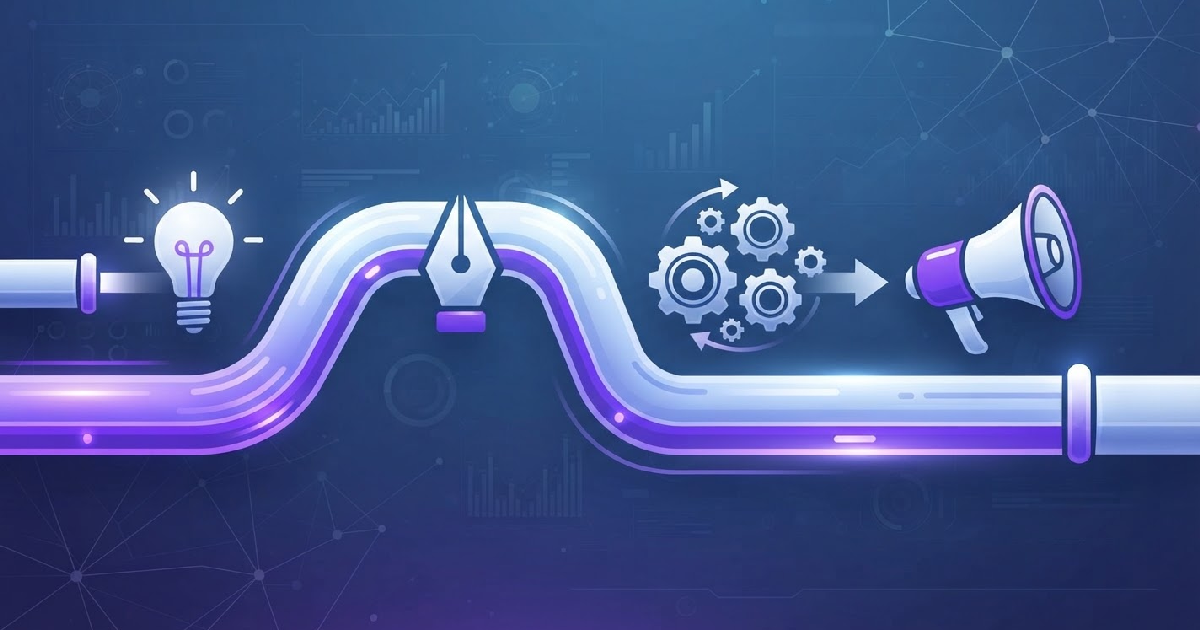
A sustainable content publishing workflow is a structured, repeatable process that guides content from idea generation to publication and promotion, ensuring consistency and preventing team burnout. Implementing such a workflow allows businesses to maintain a steady cadence of high-quality content, critical for organic growth and audience engagement without sacrificing team well-being or quality.
Establishing a robust framework is key to transforming sporadic efforts into a predictable content machine. Without a clear path, content creation can quickly become chaotic, leading to missed deadlines, inconsistent quality, and ultimately, a drained team.
Designing an Efficient Content Publishing Workflow
Crafting an efficient content publishing workflow begins with clearly defining each stage of content creation and assigning responsibilities. This foundational step ensures every team member understands their role, minimizing bottlenecks and maximizing productivity from the outset.
An effective workflow typically encompasses ideation, planning, creation, editing, optimization, scheduling, and promotion. Each phase requires specific tools and clear communication channels to move content forward seamlessly. According to a Semrush study, organizations with documented content strategies are significantly more successful than those without, highlighting the importance of a structured approach.
Key Stages in Your Content Production Pipeline
Breaking down the content journey into distinct stages helps manage complexity and allocate resources effectively. From the initial spark of an idea to the final push for promotion, each step builds upon the last.
- Ideation and Strategy: Brainstorming topics, keyword research, audience analysis, and setting measurable goals. This ensures content aligns with business objectives and audience needs.
- Planning and Assignment: Developing content briefs, assigning tasks to writers and designers, and setting realistic deadlines. Tools like project management software are invaluable here.
- Creation and Drafting: Writing the initial content, developing visual assets, and incorporating data or examples. This is where the bulk of the content takes shape.
- Editing and Review: Proofreading, fact-checking, optimizing for SEO, and ensuring brand voice consistency. Multiple review cycles often involve different team members.
- Publishing and Distribution: Formatting content for the chosen platform, scheduling publication, and disseminating it across relevant channels.
- Promotion and Analysis: Sharing content on social media, email newsletters, and tracking performance metrics to inform future strategy.
Establishing Roles and Responsibilities for Content
Defining clear roles is paramount for any functional content team. Ambiguity leads to duplication of effort or, worse, critical tasks falling through the cracks. Each role, whether writer, editor, or strategist, has unique responsibilities.
For example, a content strategist might oversee keyword research and content calendars, while a writer focuses purely on drafting, and an editor refines the copy. This specialization allows individuals to hone their skills and contribute most effectively to the workflow.
"A well-defined content workflow isn't just about efficiency; it's about creating a predictable rhythm that fosters creativity and reduces stress for the entire team," says industry expert, Ann Handley, Chief Content Officer of MarketingProfs.
Streamlining Content Creation and Approval Processes
After establishing the core workflow, the next challenge is to streamline the actual creation and approval stages to prevent bottlenecks. Inefficient review cycles or unclear feedback mechanisms can significantly delay content publication, eroding the benefits of a well-planned strategy.
Implementing standardized templates for content briefs, outlines, and final drafts can accelerate the creation process. Moreover, adopting a centralized feedback system ensures that all revisions are tracked and addressed systematically, avoiding miscommunication.
Optimizing Your Content Production Cycle
To optimize production, consider using tools that integrate various stages of your workflow. For instance, platforms that combine content writing, SEO analysis, and direct publishing capabilities can dramatically cut down on manual transfers and reformatting.
One such solution is GenPressa, which can assist in automating parts of the content generation process, freeing up your team to focus on strategic oversight and in-depth research. This can be particularly beneficial for scaling content output without increasing headcount.
Implementing Effective Review and Feedback Loops
Effective review processes are critical for maintaining quality. This involves not just catching typos but also ensuring factual accuracy, brand voice consistency, and SEO best practices. Designate specific reviewers for different stages, such as a subject matter expert for accuracy and an SEO specialist for optimization.
Using annotation tools within shared documents or a dedicated project management system centralizes feedback. This prevents disparate email threads and ensures all comments are addressed before content moves to the next stage. Regular, structured review meetings can also help expedite approvals.
For small teams, a simple two-person review might suffice—one for overall readability and one for technical accuracy. As teams grow, more specialized roles become necessary. This allows for rapid iteration and ensures that feedback is constructive and actionable, preventing endless rounds of revisions.
Leveraging Technology to Accelerate Your Publishing Schedule
The right technology stack can transform a slow, manual content workflow into a high-velocity operation. Automation and AI tools are no longer luxuries but necessities for teams aiming to ship content weekly without exhaustion.
From project management software to AI-powered writing assistants, these tools can automate repetitive tasks, improve collaboration, and provide data-driven insights. Investing in appropriate technology pays dividends in efficiency and content quality.
Essential Tools for Workflow Automation
A suite of integrated tools is often more powerful than individual solutions. Consider platforms that offer robust project management, content creation assistance, and publishing integrations.
- Project Management Systems: Trello, Asana, Monday.com — for task assignment, deadline tracking, and team collaboration.
- Content Creation & AI Writing Tools: AI writers like GenPressa and Grammarly can streamline drafting and editing, catching errors and suggesting improvements.
- SEO Tools: Semrush, Ahrefs, Moz — for keyword research, competitive analysis, and content optimization.
- Digital Asset Management (DAM): Central repositories for images, videos, and other media to ensure brand consistency and easy access.
- Scheduling & Publishing Platforms: WordPress, Buffer, Hootsuite — for managing publication across various channels.
Integrating AI for Enhanced Content Velocity
AI can significantly enhance the speed and scale of your content efforts. AI writing assistants can generate initial drafts, brainstorm ideas, or even optimize existing content for SEO, saving considerable time.
When integrated judiciously, AI tools like GenPressa can help overcome writer