
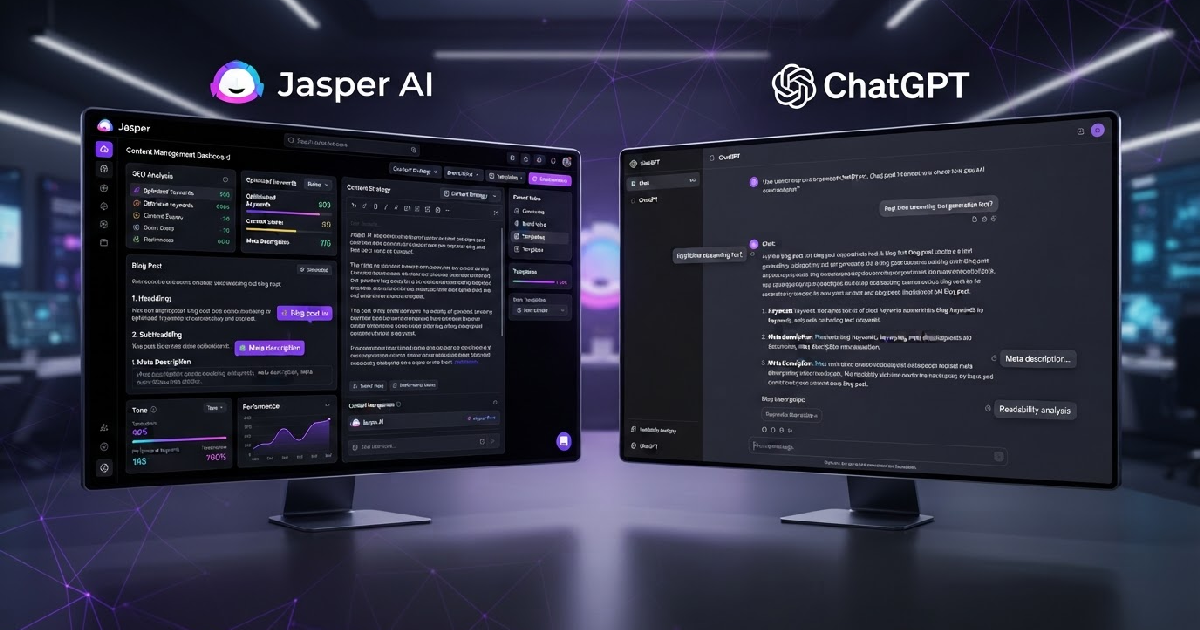
Choosing between ChatGPT vs Jasper for blog writing hinges on specific content goals, workflow preferences, and budget. While both leverage advanced AI, ChatGPT excels in conversational versatility and rapid ideation, whereas Jasper shines with its structured templates and brand voice consistency.
For content creators aiming to optimize efficiency and maintain high quality, understanding the nuances of each tool is paramount. This comparison delves into how ChatGPT and Jasper approach content generation, their strengths in SEO, and overall value for blog writers and digital marketers.
ChatGPT vs Jasper for Blog Writing: Core Differences & Capabilities
The fundamental distinction between ChatGPT and Jasper lies in their design philosophy and primary use cases. ChatGPT, developed by OpenAI, is a large language model optimized for conversational interaction, offering a highly flexible, open-ended approach to text generation.
Conversely, Jasper, built on OpenAI's models but with an added layer of proprietary technology, is engineered as a dedicated marketing and content creation platform, focusing on structured output and user-friendly templates for specific content types. This specialization helps users generate targeted content efficiently.
Understanding ChatGPT's Generative AI
ChatGPT operates as a powerful conversational AI, capable of generating human-like text across an incredibly broad range of topics and styles. Its strength lies in its adaptability; users can prompt it with almost any request, from outlining an entire blog post to drafting creative narratives or even coding snippets. The output quality largely depends on the clarity and detail of the input prompt.
This flexibility makes ChatGPT an excellent tool for brainstorming ideas, overcoming writer's block, or producing initial drafts quickly. However, its raw, chat-based interface means users often need to guide the AI more actively, providing iterative feedback to refine the output to meet specific requirements for tone, structure, and SEO integration.
Jasper's Template-Driven Approach for Content Creation
Jasper, formerly known as Jarvis.ai, positions itself as an AI copilot for marketing teams. It offers hundreds of pre-built templates designed for various content formats, such as blog post outlines, product descriptions, ad copy, and social media posts. This structured approach simplifies the content generation process, especially for those who need consistent output.
With features like Brand Voice, SEO Mode (integration with Surfer SEO), and Campaigns, Jasper aims to streamline the creation of high-volume, brand-aligned content.
While it provides less free-form conversational flexibility than ChatGPT, its dedicated tools and templates can significantly reduce the time spent on editing and formatting, making it a strong contender for businesses with extensive content needs. According to a recent survey by SEMrush, 72% of marketers using AI tools reported increased content output and efficiency.
Evaluating Content Quality: Creativity, Tone, and Originality
When assessing AI-generated content, quality is paramount. Both ChatGPT and Jasper can produce high-quality text, but their strengths often manifest in different scenarios, impacting creativity, adherence to tone, and perceived originality. The choice depends on whether you prioritize raw creative output or brand-consistent, polished content.
Many writers utilize AI as a starting point, integrating human oversight to ensure factual accuracy and unique perspective. For further insights into balancing AI and human input, consider reading AI Content vs Human Content: Which One Google Rewards Most?
ChatGPT's Adaptability in Voice and Style
ChatGPT's greatest asset in content quality is its sheer adaptability. With the right prompting, it can mimic a wide array of tones, from highly formal and academic to casual and humorous. This makes it incredibly versatile for generating unique angles or experimenting with different narrative styles for blog posts.
However, this flexibility can also be a challenge. Without precise instructions, ChatGPT might produce generic or less focused content. Achieving a consistent brand voice across multiple outputs requires meticulous prompt engineering and close human review. Its creativity often shines in generating unexpected ideas or phrasing, which can be invaluable for sparking new blog post concepts.
Jasper's Brand-Specific Content Generation
Jasper excels at maintaining a consistent brand voice and tone across numerous content pieces, a critical factor for businesses. Its Brand Voice feature allows users to train the AI on existing content, ensuring that all new output aligns with established guidelines. This reduces the need for extensive post-generation editing to match brand standards.
While Jasper might feel less "creative" in its initial suggestions compared to ChatGPT's open-ended responses, its output is often more directly usable for specific marketing goals. This is particularly true for generating commercial content where consistent messaging is key. In our testing, Jasper consistently produced blog sections that required fewer revisions for tone consistency than raw ChatGPT outputs.
Speed and Efficiency: Which AI Writes Faster?
For blog writers, speed and efficiency are crucial metrics for any tool, especially when dealing with tight deadlines or high content volumes. Both ChatGPT and Jasper offer significant speed advantages over traditional manual writing, but their operational efficiencies differ based on workflow and user expertise.
The speed at which you can generate usable content often depends on how well you understand and interact with each platform. Tools like GenPressa further optimize this by integrating AI writing directly into your publishing workflow, reducing manual steps.
Prompt Engineering with ChatGPT
ChatGPT can generate content extremely quickly once a prompt is entered. However, the true "speed" with ChatGPT is often found in the iterative process of prompt engineering. Users might spend time crafting the perfect initial prompt, then refining subsequent prompts based on the AI's responses.
For experienced users who understand how to guide the AI effectively, ChatGPT can produce vast amounts of raw content in minutes. The challenge and time investment typically lie in shaping that raw output into a polished, SEO-optimized blog post, requiring more human intervention in editing and structuring.
Streamlined Workflows with Jasper
Jasper's strength in efficiency comes from its structured templates and integrated features. Instead of crafting detailed prompts from scratch for each section, users can select a template (e.g., "Blog Post Intro Paragraph") and fill in a few key fields. This streamlines the initial content generation, making it faster for less experienced AI users or those needing specific content types.
Moreover, features like Jasper Chat, which combines conversational AI with template access, offer a hybrid approach. The ability to manage projects and campaigns within the platform also contributes to overall workflow efficiency, especially for teams producing content at scale. This can lead to a quicker path from idea to first draft, significantly cutting down production time for your blog posts.
SEO Performance: Keyword Integration and Structure
In the competitive landscape of digital publishing, SEO is non-negotiable. Both ChatGPT and Jasper can assist with SEO, but their capabilities and integration methods vary. Ensuring your AI-generated content ranks well requires a strategic approach to keyword integration, topic coverage, and structural optimization.
Understanding how AI influences search engine optimization is vital for any content strategist. For more on this, check out Can AI Write SEO Blog Posts for Page One Rankings?
Crafting SEO-Friendly Content with AI
ChatGPT can be prompted to include specific keywords, answer common questions (which aids in featured snippet potential), and structure content with appropriate headings. However, this often requires the user to have a strong understanding of SEO principles and to explicitly guide the AI. It's a powerful tool for generating content that *can* be optimized, rather than content that is inherently optimized.
Users must manually input keywords, instruct on topic clustering, and often use external SEO tools to analyze keyword density or content gaps. This makes ChatGPT highly flexible for advanced SEO practitioners but might be less intuitive for beginners looking for built-in guidance.
The Role of AI in Topical Authority
Jasper takes a more integrated approach to SEO, primarily through its partnership with Surfer SEO. This integration allows users to input target keywords and receive real-time recommendations for additional keywords, suggested headings, and overall content structure directly within the Jasper editor. This significantly aids in creating topically comprehensive and SEO-optimized blog posts.
The platform helps ensure content covers relevant subtopics, increasing its potential for establishing topical authority. While requiring a separate Surfer SEO subscription, this integration makes Jasper a more "out-of-the-box" solution for SEO-conscious content creators. For those considering integrating AI into their content strategy, comparing pricing models is crucial; detailed options are available at GenPressa's pricing page.
Cost-Effectiveness and Scalability for Content Teams
The financial implications and scalability of AI tools are significant considerations for any content operation, from solo bloggers to large agencies. The pricing structures of ChatGPT and Jasper reflect their different business models and feature sets, influencing their cost-effectiveness based on usage volume and required functionalities.
Evaluating the ROI of AI writing tools involves more than just subscription fees; it includes saved time, increased output, and potential improvements in content performance. Scaling content creation with AI can dramatically alter a team's capabilities, especially when platforms offer flexible plans.
Pricing Models for AI Writing Tools
OpenAI offers ChatGPT with a freemium model, providing a free tier for basic usage and a subscription-based "Plus" version for enhanced access, faster responses, and priority to new features. For developers and high-volume users, OpenAI also provides API access, where costs are based on token usage. This can be highly cost-effective for precise, controlled applications.
Jasper operates on a subscription model, typically offering tiered plans based on word count and included features. While its entry-level plans might appear more expensive than basic ChatGPT access, they often include a suite of marketing-specific tools, advanced integrations, and dedicated support that justify the price for professional content teams.
A detailed breakdown of features and costs can be found at GenPressa's pricing page, which offers comparable benefits.
Integrating AI into a Content Strategy
For scalable content operations, the choice between ChatGPT and Jasper often comes down to the desired level of integration and automation. ChatGPT's API allows for deep custom integration into existing content management systems or bespoke workflows, offering maximum flexibility for tech-savvy teams.
Jasper, with its comprehensive platform, is designed for immediate integration into content workflows, especially for teams already using other marketing tools. It provides a more 'plug-and-play' solution for scaling content production without extensive development work. Both tools, when used effectively, can significantly boost your content strategy and help manage your publishing cadence, as discussed in How Often Should I Publish Blog Posts, Really?
Real-World Applications: Use Cases for Each Tool
To truly understand which AI tool is best for your blog writing needs, it helps to consider practical scenarios where each excels. While there's overlap, their core strengths lead to distinct ideal use cases that can optimize your content workflow.
"In the dynamic world of AI content creation, the best tool isn't a one-size-fits-all solution; it's the one that integrates seamlessly into your specific workflow and amplifies your unique strengths as a writer." – GenPressa Content Strategist
For example, a freelance blogger might find ChatGPT invaluable for quick ideation and drafting, while a marketing agency might lean on Jasper for consistent, high-volume brand content. This highlights the importance of matching the tool to the task.
ChatGPT for Idea Generation and Drafts
ChatGPT is exceptionally good for the early stages of blog post creation. Need a list of compelling blog topic ideas around "sustainable living"? ChatGPT can generate dozens in seconds. Stuck on how to phrase a complex technical concept for a general audience? Its conversational nature makes it excellent for rephrasing and simplifying.
It's also perfect for generating initial outlines or drafting rough sections of content, allowing writers to quickly populate a document with a foundational text that they can then refine and humanize. This is particularly useful for breaking through writer's block and getting a head start on content creation.
Jasper for Polished, Optimized Posts
Jasper truly shines when the goal is to produce polished, SEO-optimized blog posts that align with specific marketing objectives. Its templates guide users through the process of writing intros, body paragraphs, and conclusions that are designed for conversions and search engine visibility. For instance, its "Blog Post Conclusion Paragraph" template ensures a strong call-to-action.
For businesses that prioritize brand consistency and require content that is immediately ready for publication with minimal human intervention for structural or SEO elements, Jasper often proves to be the more efficient choice. It streamlines the entire process from keyword integration to final draft, reducing the back-and-forth editing cycles.
Here's a comparative look at key features for blog writing:
| Feature | ChatGPT | Jasper |
|---|---|---|
| Content Generation Style | Conversational, flexible prompts | Template-driven, structured |
| SEO Integration | Manual input, user-guided | Native Surfer SEO integration |
| Brand Voice Consistency | Requires careful prompting | Built-in Brand Voice feature |
| Ease of Use for Beginners | Requires prompt engineering skill | Intuitive templates, user-friendly |
| Output Originality | High potential with creative prompts | Consistent, less unexpected |
| Best For | Ideation, drafting, versatile tasks | Polished posts, marketing copy, scale |
Maximizing Your Blog's Potential with AI Tools
Ultimately, the decision between ChatGPT and Jasper for blog writing isn't about choosing a superior tool, but rather selecting the one that best complements your existing workflow and objectives. Many successful content strategists leverage both, using ChatGPT for initial brainstorming and quick drafts, then refining and optimizing within a more structured environment like Jasper.
Consider your team's expertise, content volume, and specific SEO requirements. If you're a small team or solo blogger seeking cost-effective ideation and a flexible writing partner, ChatGPT might be your go-to. If you're an agency or larger business needing consistent brand voice, integrated SEO, and streamlined workflows for high-volume content, Jasper offers significant advantages.
Regardless of your choice, integrating AI into your content strategy can unlock new levels of productivity and creativity. Explore tools like GenPressa to see how AI can further enhance your content creation and publishing process. For detailed insights on pricing and how these tools can fit into your budget, visit GenPressa's pricing page.
The future of blog writing is undoubtedly collaborative, blending human insight with AI efficiency.