
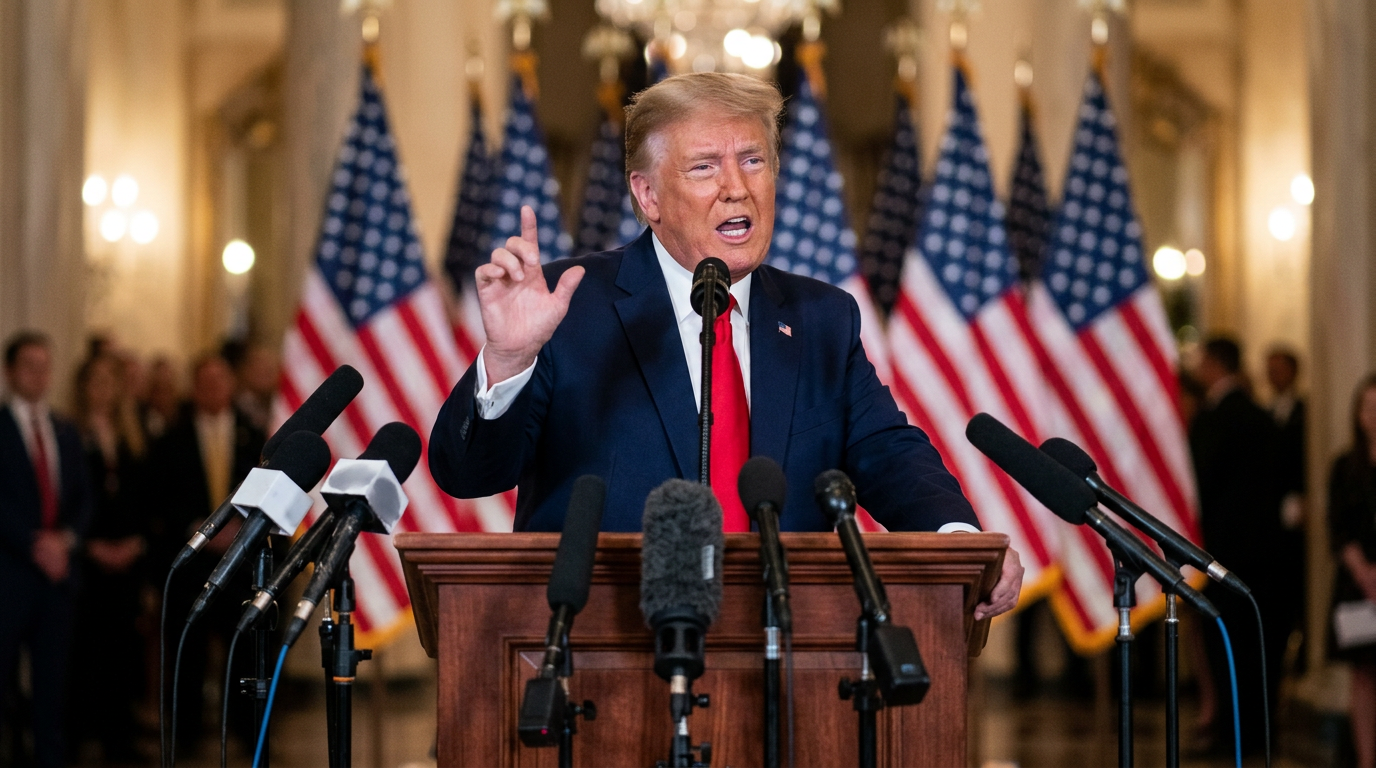
The tariff that spent a year being threatened is now law. Section 232 pharmaceutical tariffs took effect at 12:01 a.m. Eastern on 31 July 2026, implemented by Proclamation 11020, “Adjusting Imports of Pharmaceuticals and Pharmaceutical Ingredients into the United States,” signed on 2 April 2026 and published in the Federal Register on 9 April 2026 at 91 FR 18183.
The headline number is 100%. The reality is narrower and far more conditional, because most of the largest exporters and manufacturers have already negotiated their way out.
How we got here: the timeline
| Date | Event |
|---|---|
| 1 April 2025 | Commerce opens Section 232 investigation into pharmaceutical and API imports |
| 16 April 2025 | Federal Register notice seeking comment (docket BIS-2025-0022) |
| 25 September 2025 | Trump threatens 100% tariffs on branded and patented drugs from 1 October |
| Late September 2025 | White House confirms the 1 October start will not happen |
| 30 September 2025 | Pfizer becomes the first company to reach a pricing deal |
| 19 December 2025 | Nine drugmakers announce most-favoured-nation Medicaid pricing deals |
| 5 February 2026 | TrumpRx.gov launches with 43 brand-name medicines |
| 2 April 2026 | Proclamation 11020 signed |
| 31 July 2026 | Tariffs take effect |
The investigation itself was initiated by Commerce Secretary Howard Lutnick, with the comment request published in the Federal Register and reported at the time by Reuters. The September escalation — a Truth Social post threatening 100% tariffs on “any branded or patented pharmaceutical product” unless the company was building a US plant — was covered by Axios, and then quietly deferred, as Endpoints News confirmed.
What Proclamation 11020 actually covers
The proclamation text and its Annexes I–IV modify the HTSUS with a new US Note 40 and headings 9903.04.60 through 9903.04.69, applying duties to goods entered for consumption on or after 12:01 a.m. ET on 31 July 2026. The signed version is on the public record at GovInfo.
Legal analyses from Covington, Mayer Brown and Wilson Sonsini agree on the scope: certain branded and patented finished pharmaceutical products plus associated active pharmaceutical ingredients and key starting materials.
Who is exempt
| Category | Treatment |
|---|---|
| Companies building US manufacturing capacity | Exempt while plants are under construction |
| Companies with MFN pricing deals | Three-year exemption window |
| Generic finished drugs | Largely outside the patented-drug tariff |
| EU, Japan, UK, South Korea, Switzerland | Pharma tariffs capped at 15% under trade deals |
| APIs used by generic manufacturers | Still exposed via API provisions |
The White House framed the measure as a national-security and supply-chain action in its accompanying fact sheet, and Reuters described the practical bargain plainly: cut US prices, build domestically, or pay.
The country carve-outs gut the headline rate
Bloomberg reported in September 2025 that the EU and Japan would be spared the 100% rate because their negotiated agreements already capped pharmaceutical tariffs at 15%; the Japan Times confirmed the Japanese position, and Reuters covered the July 2025 deal that guaranteed “lowest tariff rates” for chips and pharma.
That sequencing matters for how the policy should be read. The trade agreements were negotiated before the proclamation was signed, so the countries responsible for the largest share of branded imports into the US were already capped at 15% on the day the 100% rate took effect.
Switzerland matters more than its size suggests
The US–Switzerland deal cut the Swiss rate from 39% to 15%, covering Novartis and Roche — two of the largest branded exporters into the US market. Fierce Pharma covered the climbdown. Between the EU, Japan, UK, South Korea and Switzerland, the volume of branded imports actually facing 100% is a fraction of the rhetoric.
Switzerland is also the clearest example of leverage running both ways. A rate cut from 39% to 15% arrived after sustained pressure from an economy whose pharmaceutical exports are concentrated in a handful of products the US health system cannot easily substitute.
The practical consequence is that the tariff bites hardest on smaller exporters and on countries without a negotiated deal, which is close to the opposite of the stated aim of reshoring high-value manufacturing.
The pricing deals are the real policy
Pfizer went first, on 30 September 2025, agreeing most-favoured-nation-aligned price cuts in exchange for a three-year tariff exemption — documented in the White House fact sheet and Pfizer’s own release. AstraZeneca followed on 10 October 2025 on the same framework, per Reuters.
By 19 December 2025, nine drugmakers had signed — including Eli Lilly, Novo Nordisk, Novartis, Roche and Merck — offering MFN pricing to Medicaid recipients in return for the three-year exemption. CNBC, CBS News and Healthcare Dive covered the round; a November 2025 fact sheet tracked the interim developments.
TrumpRx
TrumpRx.gov launched on 5 February 2026 as a direct-to-consumer cash-price platform, offering discounts on 43 brand-name medicines at launch. Coverage from NBC News noted the obvious limitation: cash prices help the uninsured and high-deductible patients, not everyone.
The mechanism is a direct-to-consumer storefront rather than a change to how insurers or Medicare buy drugs, so the savings are real but narrow. For anyone with a low copay, the listed cash price is often higher than what they already pay.
Its more durable function is political. TrumpRx gives each pricing deal a visible consumer-facing outcome, which is what makes the exemption-for-price-cuts bargain defensible in public even where the volumes involved are modest.
The generics problem
Generics account for the overwhelming majority of US prescriptions and the thinnest margins in the supply chain. They were largely spared the patented-drug tariff, but the proclamation’s API provisions still reach the imported ingredients they depend on. An AEI analysis put 2024 US pharmaceutical imports at $210.8bn in finished medicines plus $36.2bn in APIs — roughly $250bn of trade exposed. A peer-reviewed study modelled API tariff effects on US-made generic prices using 2019–2024 import data.
Shortage risk, not just price risk
Generic manufacturers facing a cost increase they cannot pass on tend to exit the product rather than absorb it. That is how a tariff aimed at branded drugs produces shortages in cheap ones. Work in the Journal of Managed Care & Specialty Pharmacy and NBER Working Paper 34531 examine pass-through and aggregate healthcare cost effects.
The exposure is concentrated in sterile injectables and older oral generics, where a handful of plants supply the entire US market and where contract prices are fixed months in advance. A cost shock arriving mid-contract cannot be repriced, so the rational response is to stop making the product.
That is why shortage listings, not retail prices, are the early-warning signal here. Price effects surface over quarters; supply withdrawal shows up in weeks.
Legal exposure
Using Section 232 — a national-security statute historically applied to steel and aluminium — for pharmaceuticals stretches its established boundaries, as Lawfare argues. Section 232 exclusion-process litigation is active at the Court of International Trade, which in April 2026 ordered CBP and BIS officials to sit for depositions in an importer’s refund case, per International Trade Insights. Section 232 measures have historically proved more durable in court than emergency-powers tariffs, but the exclusion machinery is where importers win or lose money.
The substantive legal question is how far a national-security finding can stretch. Steel and aluminium had a defence-industrial argument that pharmaceuticals only partly share, and the government leans heavily on supply-chain concentration in a small number of foreign plants to make the case.
For importers, the near-term fight is procedural rather than constitutional. Classification under the new HTSUS headings, and whether a given API qualifies as a key starting material, decide far more money in practice than any challenge to the proclamation itself.
What to watch next
The tariffs are less than two weeks old, so retail price data does not exist yet. Three indicators will matter first: FDA shortage listings for generic injectables and other API-dependent products; whether announced US plant construction converts into filed permits and poured concrete; and whether any of the nine MFN signatories renegotiates before its three-year window closes.
A fourth indicator is customs data. Monthly import values under the new headings will show whether trade is being redirected through capped countries rather than reshored, which is the outcome the exemption structure quietly encourages.
The three-year exemption windows are the real deadline in this policy. They expire inside the next presidential term, which means the durability of both the pricing deals and the tariff itself is a political question as much as an economic one.
Frequently asked questions
When did the pharmaceutical tariffs take effect?
12:01 a.m. Eastern on 31 July 2026, for goods entered for consumption on or after that time.
Is the tariff really 100%?
Up to 100% on covered patented and branded products, but exemptions for companies building US plants, companies with pricing deals, and countries with trade agreements capping pharma tariffs at 15% mean far less trade faces the top rate.
Are generic drugs tariffed?
Generic finished drugs are largely outside the patented-drug tariff, but generic makers remain exposed through tariffs on imported active pharmaceutical ingredients.
Which companies are exempt?
Nine drugmakers — including Pfizer, AstraZeneca, Eli Lilly, Novo Nordisk, Novartis, Roche and Merck — secured three-year exemptions by agreeing most-favoured-nation pricing for Medicaid and US investment commitments.
Which countries are capped at 15%?
The EU, Japan, the UK, South Korea and Switzerland, under negotiated trade agreements.
Will drug prices rise?
Economic modelling from NBER, AEI and peer-reviewed journals projects meaningful pass-through, concentrated in generics reliant on imported APIs. Measured retail effects were not yet observable as of mid-August 2026.
What is Section 232?
A provision of the Trade Expansion Act of 1962 allowing tariffs on imports found to threaten national security, traditionally used for metals rather than medicines.