
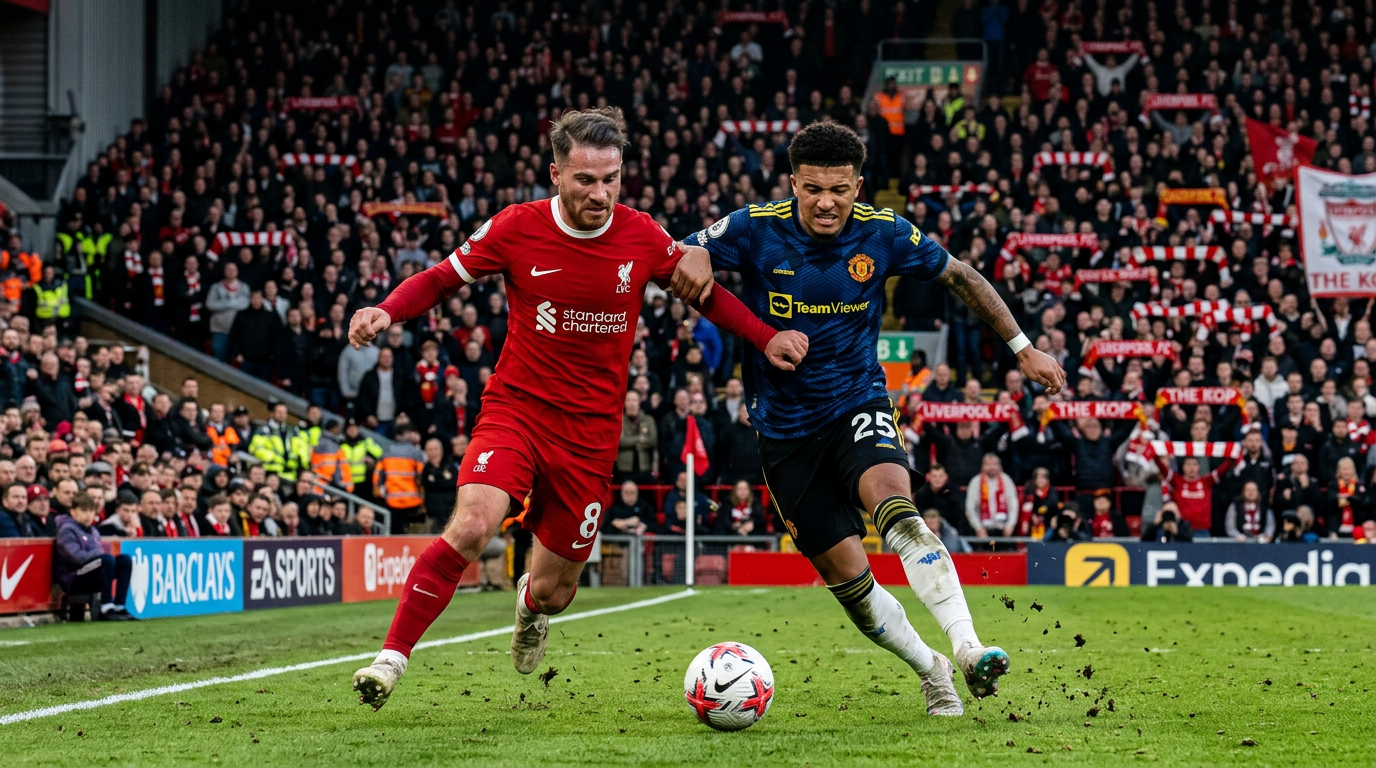
The 2026-27 Premier League season kicks off on Friday 21 August 2026 and runs to 30 May 2027 — the 35th Premier League season and the 128th of English top-flight football. Fixtures were released on 19 June at 10:00 BST, and the shape of round one has been picked over ever since.
Opening weekends rarely settle anything, but they reveal plenty: which squads are actually finished, which new signings are match-fit, and how strictly officials intend to apply a notably long list of law changes. Below is what matters, and what to ignore.
The season in numbers
| Item | Detail |
|---|---|
| Season | 2026-27 — 35th Premier League season |
| First matchday | 21 August 2026 |
| Final matchday | 30 May 2027 |
| Fixtures released | 19 June 2026, 10:00 BST |
| Defending champions | Arsenal |
| Promoted | Coventry City, Ipswich Town, Hull City |
| Transfer window closes | 1 September 2026, 23:00 BST |
The season was formally ratified at the Premier League’s AGM, with the promoted clubs joining and the table reset — the administrative detail confirmed in the league’s own season-start announcement. Full fixture and kick-off detail sits on the official fixtures page.
Arsenal begin as champions for the first time in 22 years
Arsenal won the 2025-26 title, ending a 22-year wait, after Manchester City drew 1-1 at Bournemouth and finished four points back — the sequence set out in the league’s title confirmation. Defending is a different job from chasing, and the club has spent the summer accordingly.
The Arsenal rebuild is aggressive for a champion
Bruno Guimarães arrived in early August, confirmed by Arsenal’s official announcement, alongside Christos Tzolis from Club Brugge. Goalkeeper Illan Meslier joined on a free from Leeds and Piero Hincapié came in from Bayer Leverkusen for a reported £34.5m, per Football365’s confirmed-transfer tracker.
That is a lot of new midfield and defensive spine for a title-winning side. Round one is the first look at whether the additions are integrated or merely acquired — watch pressing coordination in the opening 20 minutes, which is where unfamiliar midfield pairings fail first.
Manchester United are rebuilding again
United completed Andrey Santos from Chelsea for a reported £48m on 13 July, held advanced talks for Aston Villa’s Youri Tielemans and were linked with Ederson from Atalanta, per BBC Sport’s transfer reporting. Club-by-club ins and outs are tracked in full by ESPN and the league’s official transfer list.
The pattern is familiar and the risk is specific: United keep buying into midfield without settling on a hierarchy in it. Santos is a controller, Tielemans a tempo-setter, and both want the same zone in front of the defence. Whoever starts round one is a statement about which version of the team the manager actually believes in.
There is also a squad-balance question that transfer fees do not answer. A £48m midfield addition does not resolve the recurring problem of a first XI that concedes early goals from wide areas, so the opening weekend is worth watching for shape without the ball rather than for the names on the team sheet.
Three promoted clubs, three different problems
Coventry City, Ipswich Town and Hull City come up from the Championship. Hull took the final place by beating Middlesbrough 1-0 in the Wembley play-off final, Oli McBurnie scoring, as covered in the league’s promotion explainer. Liverpool’s scouting feature on all three is a useful primer on style rather than reputation.
Ipswich have been here recently
Ipswich carry the most relevant experience: a squad that has already been exposed to Premier League tempo and knows precisely where it was punished. That memory is worth points in August, when other promoted sides are still learning how quickly space closes.
The practical advantage shows in decision speed. Players who have already been pressed by a top-six side know when to play forward and when to accept a throw-in, and that single habit prevents the turnovers in own-half possession that punish promoted teams hardest in the first month.
The counterweight is expectation. A squad with recent Premier League minutes is also a squad other clubs have already scouted in this division, so surprise is no longer part of the plan. Ipswich need points from structure, not novelty.
Coventry and Hull face the August squeeze
Both arrive with the classic promoted-club timing problem: the window does not shut until 1 September, so the squad that plays round one is not the squad that plays October. Judge them on structure without the ball, not on results.
Coventry arrive with a possession-based identity that earned promotion but has never been tested against sides that press with Premier League intensity. The interesting question in round one is whether they hold that identity under pressure or abandon it inside twenty minutes.
Hull face the harder version of the same squeeze. Play-off promotion arrives late, which compresses recruitment into a window that is already inflated, and the squad most likely to change between August and September is the one that arrived last. Early results for both clubs should be read as sampling, not as a verdict.
New rules land immediately
The league has published Football Principles and Refereeing Points of Emphasis for 2026-27, developed with PGMOL, setting out how the Laws of the Game will be interpreted — including a high threshold for penalising on-field challenges. The detail is in the official principles announcement.
| Change | What it means in round one |
|---|---|
| Points of emphasis with PGMOL | Higher threshold for penalising physical challenges |
| Yellow cards for deliberate hair-pulling | Bookings without excessive force required |
| Increased treatment breaks | Fewer stoppages weaponised for time-wasting |
| Substitution countdown clock | Slow substitutions become punishable delay |
| IFAB clarifications and trials | Goalkeeper injury tactics and VAR protocol under review |
The hair-pulling guidance was reported by Sky Sports; the broader package of mandatory law changes, treatment breaks and the substitution countdown was summarised by Goal. IFAB Circular 34, dated 27 July 2026, covers the underlying clarifications and trials, including tactical goalkeeper injuries and VAR protocol.
Expect an August card spike
Every rule-change season produces the same pattern: strict early enforcement, loud complaints, and quiet normalisation by October. Squads with thin depth in a single position are the ones a rash of early suspensions actually hurts.
The substitution countdown and expanded treatment breaks will produce the loudest early friction, because both change habits rather than outcomes. Coaching staff who have spent years using slow changes as a game-management tool now have a clock working against them, and the first bookings for delay will feel disproportionate.
The measurable effect to watch is added time. If the new protocols work as intended, second-half stoppage time should fall against last season, and the sides that lose most are those whose points total depended on killing the final ten minutes.
What round one will and will not tell you
It will tell you which sides have a functioning first-choice shape, which goalkeepers are comfortable with the new time-management rules, and which promoted clubs can defend a lead. It will not tell you who finishes top four. Two-thirds of the transfer window still remains, and a single result in August has minimal correlation with a final table.
Historically, the correlation between opening-weekend results and final position is weak enough to be useless as a forecast, because fixture difficulty is unevenly distributed and squads are still incomplete. A champion losing in week one and a promoted side winning are both entirely normal.
What does carry forward is information about method. A team that creates chances from a repeatable pattern in August usually keeps creating them, even when the results lag; a team that wins on individual moments without a pattern rarely sustains it past September.
Three things worth tracking
First, minutes given to new signings — a manager who trusts a July arrival for 90 minutes in August is signalling something. Second, set-piece organisation, historically the fastest way for a promoted side to steal points. Third, referee-driven stoppage time, which the new substitution and treatment protocols are explicitly designed to reduce.
A fourth, quieter indicator is substitution timing. Managers who make changes on the hour rather than waiting for the seventieth minute are usually the ones managing a fitness deficit, and that shows up in results by late September rather than on the opening weekend.
Taken together, these are the signals that separate a squad that is ready from one that merely looks expensive. None of them require a result to interpret, which is exactly why they are more useful than the table after one match.
Frequently asked questions
When does the 2026-27 Premier League season start?
Friday 21 August 2026. The season concludes on 30 May 2027.
Who are the defending champions?
Arsenal, who won the 2025-26 title — their first in 22 years — finishing four points clear of Manchester City.
Which clubs were promoted for 2026-27?
Coventry City, Ipswich Town and Hull City. Hull came through the play-offs, beating Middlesbrough 1-0 at Wembley.
When does the summer transfer window close?
1 September 2026 at 23:00 BST, so round-one squads are not final squads.
What are the main rule changes for 2026-27?
New refereeing points of emphasis agreed with PGMOL, yellow cards for deliberate hair-pulling, increased treatment breaks, a substitution countdown clock, and IFAB clarifications covering tactical goalkeeper injuries and the VAR protocol.
Where can I check exact kick-off times?
The official Premier League fixtures page carries confirmed dates, times and broadcast slots, which can move for television selections.